

Your skin is trying to tell you something.
That persistent itch, redness, or irritation that won’t go away? It’s not just “sensitive skin.” It’s a message — and in this blog, we’re going to help you decode it.
Whether you’re dealing with facial itching, flaking around the nose, stinging cheeks, or a rash that comes and goes, let’s walk through the most common causes of itchy, reactive skin in adults — and how to start telling them apart.
But First… Why is Your Skin Itching?
Itchy skin is usually a symptom of inflammation, barrier disruption, or an immune response — and not all causes are the same.
Some are triggered by yeast overgrowth, others by hormones, allergens, environmental stress, or even gut imbalances.
And sometimes, two or more conditions overlap (hello, complex skin!).
The Most Common Causes of Adult Facial Itch or Rash
Here’s a breakdown of the top contenders, what makes them unique, and how to tell them apart:
1. Seborrhoeic Dermatitis
What it is:
An inflammatory condition linked to Malassezia yeast overgrowth.
Common signs:
- Greasy, flaky scales (often yellowish)
- Affects nasolabial folds, eyebrows, scalp, ears, sides of nose
- Worsens with stress, winter, or illness

Itches? ✅ Yes
Stings? ✅ Sometimes
Triggers: Weather, fungal infection, immune suppression, barrier breakdown
2. Rosacea (Erythematotelangiectatic or Papulopustular)
What it is:
A chronic inflammatory condition affecting blood vessels and immune response.
Common signs:
- Flushing, persistent redness
- Sensitive, burning, stinging
- May include papules/pustules that look like acne
- Often on cheeks, nose, chin

Itches? ❌ Rarely
Burns or stings? ✅ Yes
Triggers: Heat, sun, alcohol, stress, histamine-rich foods, hormonal shifts
3. Perioral Dermatitis
What it is:
A facial rash often triggered by topical steroid use, overuse of skincare, or hormonal shifts.

Common signs:
- Clusters of tiny red bumps around mouth, nose, eyes
- Sparing of the vermilion border (lip edge)
- Can look like acne but feels more inflamed
Itches? ✅ Sometimes
Burns or stings? ✅ Frequently
Triggers: Topical steroids, fluoride toothpaste, barrier disruption, hormones
4. Contact Dermatitis (Irritant or Allergic)
What it is:
A reaction to something your skin touches — like fragrance, skincare, metals, detergents, or even pollen.

Common signs:
- Red, itchy, scaly rash
- Can appear hours or days after exposure
- May be well-demarcated (you can see the outline of where it touched)
Itches? ✅ Definitely
Burns or stings? ✅ Sometimes
Triggers: Skincare, nickel, fragrance, chemicals, gloves, makeup, sunscreen
5. Atopic Dermatitis (Eczema)
What it is:
A chronic condition involving barrier dysfunction, immune reactivity, and often a personal or family history of allergies.

Common signs:
- Dry, itchy, inflamed patches (may ooze or crack in flares)
- Often on neck, around eyes, inner elbows, behin ears
- Often worsens with stress, cold weather, or scented products
Itches? ✅ Profoundly
Burns or stings? ✅ Often when barrier is broken
Triggers: Stress, allergens, fragrances, synthetic fabrics, sweat
6. Dyshidrotic Eczema (Pompholyx)
What it is:
A form of eczema that causes small, intensely itchy blisters on the hands (and sometimes feet).

Common signs:
- Tiny clear fluid-filled blisters on fingers, palms, or soles
- Itchy, prickly, or tight skin before the blisters appear
- Peeling or cracking skin as blisters heal
Itches? ✅ Intensely
Burns or stings? ✅ Especially as blisters dry out
Triggers: Stress, sweating, nickel, detergents, hormonal shifts
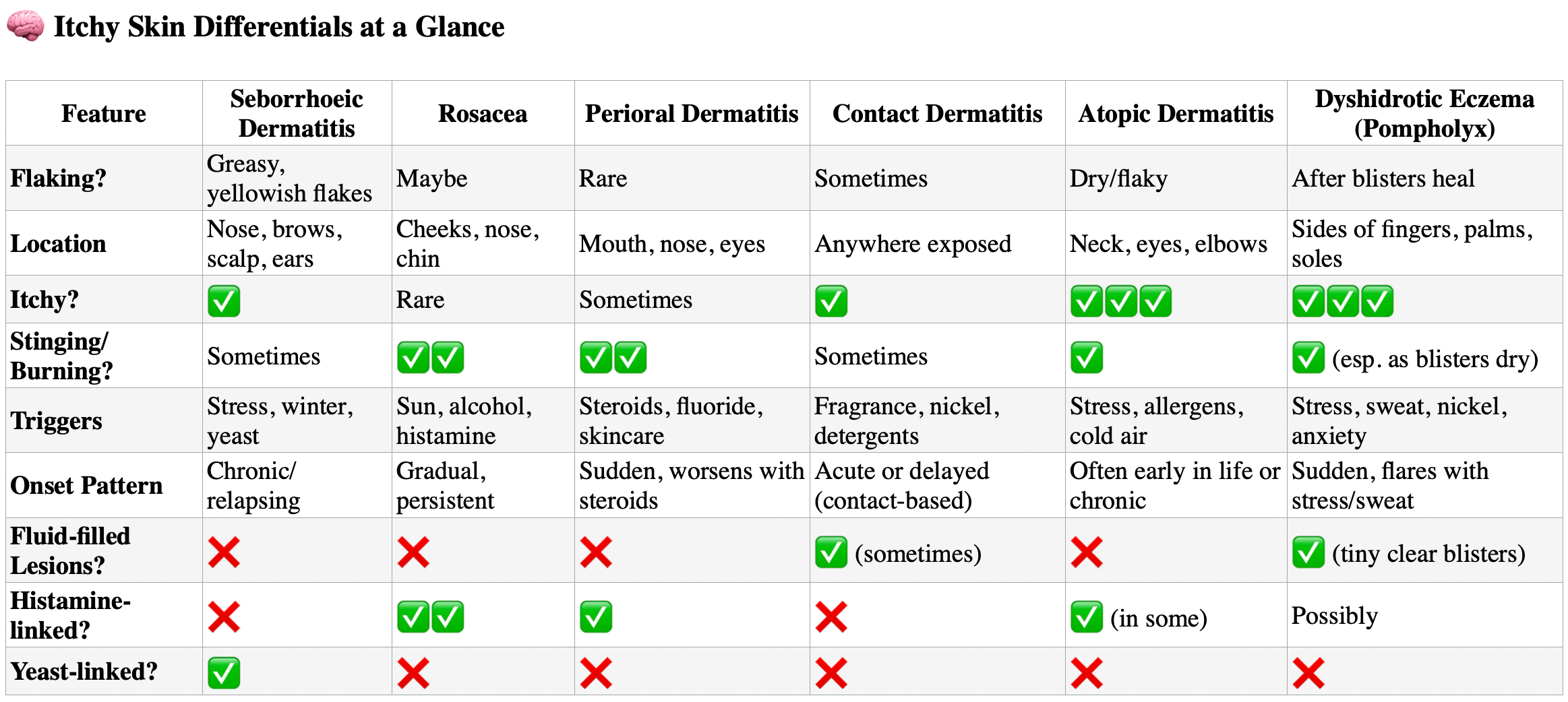
So How Do You Know What You Have?
Here are some key clues to help differentiate
What You Can Do Next
Once you have a working idea of what you’re dealing with, you can start tailoring your approach:
Consider Functional Testing
- Patch testing → for contact dermatitis
- Hormone testing (DUTCH) → if symptoms flare with cycles or perimenopause
- Stool testing (GI-MAP) → if you suspect yeast, gut-skin link, or histamine overload
- Food sensitivity testing → for eczema or histamine-driven skin
Keep a Symptom Diary
- Track flare patterns, foods, products, and hormonal changes
- Take photos — it helps with pattern recognition and practitioner guidance
Avoid Blanket Treatments
- A steroid cream may help eczema, but worsen perioral dermatitis
- Antibacterial cleansers can aggravate rosacea but soothe folliculitis
- The goal is not to silence symptoms, but to understand why they’re showing up
What’s Next in This Series
This blog is the first of a series designed to help you understand your skin, not fear it. In the coming weeks, I’ll share:
✅ How to manage seborrhoeic dermatitis — conventionally and holistically
✅ Natural support for rosacea
✅ How to calm and repair the skin barrier after perioral dermatitis
✅ How to soothe eczema from the inside out
✅ Triggers and tools for sensitive, allergic skin
Need Personalised Guidance?
Book a consultation with me if you’d like support exploring your skin story more deeply — whether through testing, treatment, or simply understanding your body with more kindness and clarity.